

If your home was built before 1996 you likely have received some form of confusing notifications from your insurance company or will soon. Florida insurance premiums have seen some stabilization in 2026, but eligibility for homes older than 30 years is now tied to strict underwriting requirements.
For these properties, the 4-Point Inspection is the “make or break” document. It is a specialized report covering the four vital systems of your home; if even one fails, your entire policy—and your chance at a rate credit—could disappear.
The 4 Systems That Matter Most
To keep your home protected and your premiums manageable, these four areas must be in top shape:
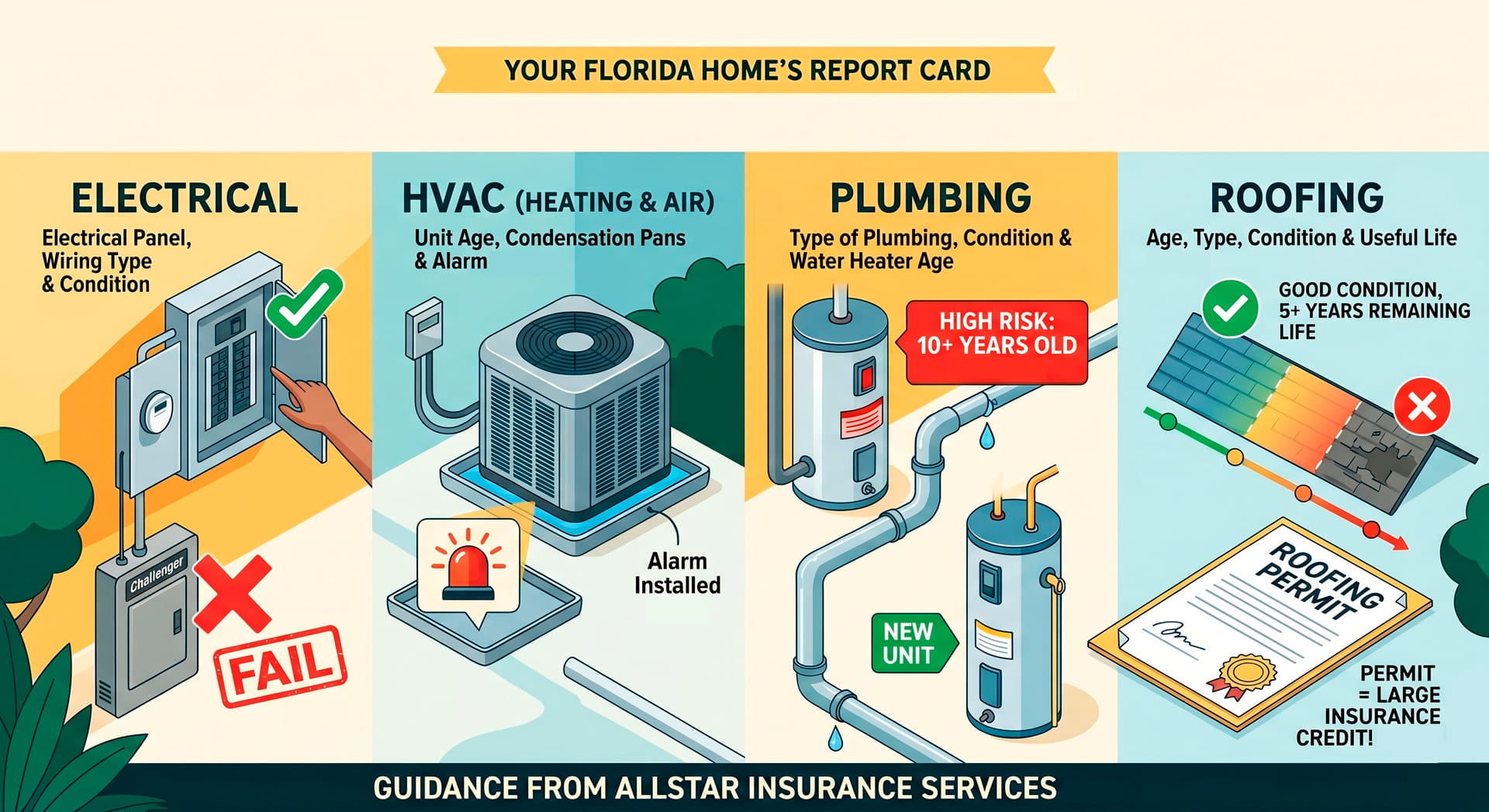
- Electrical: Electrical Panel(s), Type of Wiring and Condition
- HVAC (Heating & Air): Age of your AC units, Condensation Pans and Alarm Installed
- Plumbing: Type of Plumbing, Condition, and Age of your Water Heater
- Roofing: Age, Type of Covering, Condition and Estimated Useful Life Remaining
Pro Tip: While not always required for the inspection itself, the documented roofing permit nearly always triggers a large insurance credit.
The “3 Biggest Inspection Killers” for Older Homes
Killer #1: The “Uninsurable” Electrical Panel
Even if your lights stay on, your insurer may view your panel as a ticking fire hazard. Brands like Federal Pacific (Stab-Lok), Zinsco and Challenger—once common in older Florida construction—are now automatic “fails” for almost all carriers.
Killer #2: The 10-15 Year Old Water Heater
In a softening insurance market the still most notorious loss is non-weather related wáter damage. Water Heater starting at 10 years old can be flagged as high-risk. You may not observe any damage but there’s been too many reports of falure/bursts. Its a good idea to replace it as son as you can because all Insurance companies will require it at some Point to maintain your policy.
Killer #3: Roof Condition
Deteriorated or Unacceptable Roofing is a primary cause for non-renewals. Generally, a roof must be in good condition with at least 5 years of estimated life remaining to be eligible. Regular maintenance and no delay in repairs when needed allows the roof to last to the standard aceptable roof life. And , remember to use permits! Without permits you Risk not Receiving a credit for your new roof.
The All Star Difference: A Roadmap to Insurability
We know an inspection can feel like a “report card” on your life’s biggest investment. At AllStar Insurance Services, we don’t just check boxes; we provide a Roadmap to Insurability by understanding what each company requires and keeping you informed.